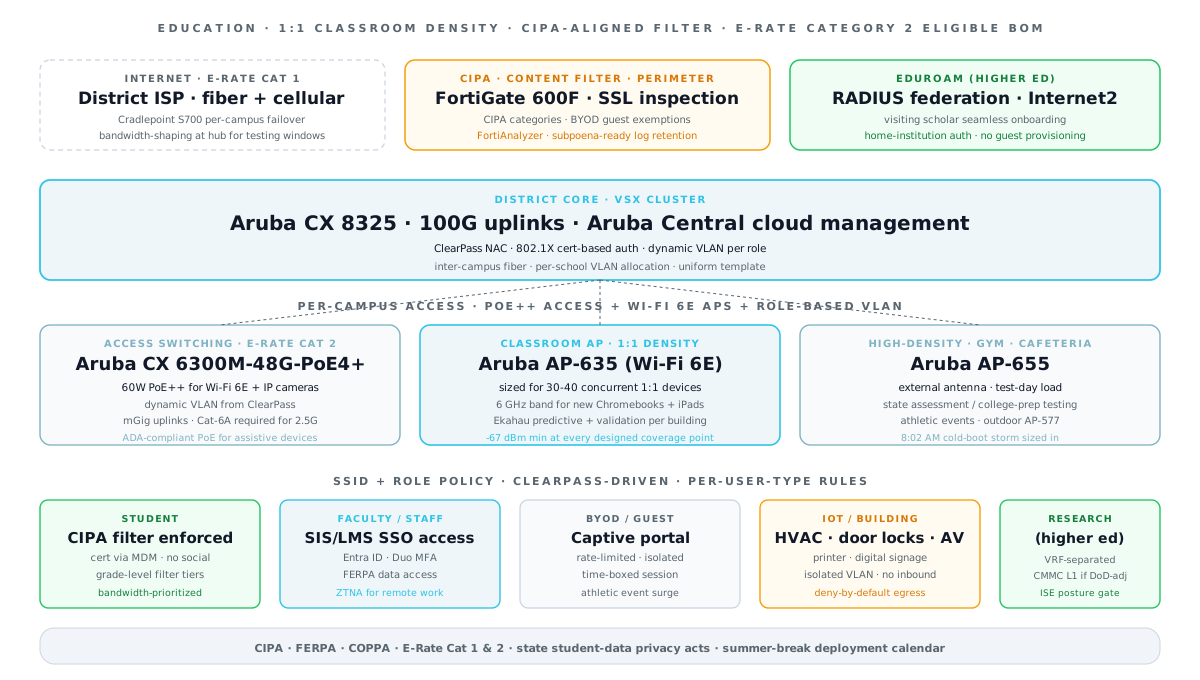
Education networks absorb more load than a typical enterprise: 1:1 device density, 8am cold-boot storms, streaming-video curricula, and testing windows where performance has to be perfect. Netcom designs around those specific load profiles with Wi-Fi 6E, proper PoE headroom, and content filtering that satisfies CIPA.
School-year traffic doesn't look like corporate traffic. At 8:02 AM, 2,500 Chromebooks are requesting DHCP, authenticating to 802.1X, and hitting the same single-sign-on page within a 60-second window. If the authentication backend can't keep up, instructional time evaporates. If the AP channel plan overlaps badly in a double-wide classroom, handoff drops kill the teacher's video stream.
Then testing windows arrive. State assessments load per-grade in mass windows. A state-level slowdown can force a district to postpone testing — with budget and accountability consequences. Network performance is educational performance.
Netcom designs education networks around the actual load profile — not a generic "users per AP" ratio. Aruba AP-635 or Cisco Catalyst 9166 for 1:1 classroom density. Aruba CX 6300M or Catalyst 9300-48UXM at access with PoE++ for the APs. FortiGate or Palo Alto at the perimeter doing CIPA-aligned URL filtering. And design documentation that maps to E-Rate Category 2 eligibility so the federal reimbursement is already scoped into the capital plan.
Designed for a mid-sized district (5–40 campuses). Extends to higher-ed with eduroam and research-network overlays.
Illustrative schools drawn from real deployment patterns. Names are fictional; scope, vendors, and outcomes reflect actual Netcom work.
1:1 Chromebook initiative exposed aging Wi-Fi: test windows slowing to 3 Mbps per device, handoff drops in double-wide classrooms, no AP-level policy. Netcom delivered Aruba AP-635 across 24 campuses with Ekahau predictive + on-site validation. Cable plant was the bottleneck: six schools had Cat-5 drops to classrooms that couldn't carry 2.5G uplinks from the new APs. Re-pulled Cat-6A to 140 rooms over two summers rather than undersize the APs. E-Rate Category 2 documentation scoped the re-cabling correctly; FCC reimbursement cleared without a contest.
Campus refresh with three demands: high-density dorms, open academic network, eduroam research overlay with segmented access to research computing. Netcom delivered Catalyst 9800 controllers + Catalyst 9166 APs in dorms, VRF separation, eduroam federation. Scope grew mid-summer: mid-install, the college's research office signed a new DoD-adjacent grant that required CMMC Level 1 posture on the research VRF. We rewrote the research-network policy with ISE posture enforcement, added CrowdStrike for research endpoints, and pushed go-live one month. Eduroam went live on original date for the academic side.
Private academy transitioning to 1:1 iPads needed wall-to-wall Wi-Fi, CIPA filtering that also respected the school's faith-based content policy, and a parent guest network for athletic events. Netcom delivered Meraki MR46, FortiGate 100F with custom filter categories, guest captive portal. Where we got reminded of school budgets: original BOM included a FortiGate 200F we'd sized for headroom. Head of school pushed back hard on spec, and we re-scoped to 100F with an upgrade path documented for when the school hits 600 devices. Right call: three years in, they're still under 450 devices.
Send us your campus list, device counts, and your E-Rate cycle. Within 10 business days you'll get a sized design with Ekahau predictive heatmaps, a Category-1/2 eligible BOM, and a summer-break deployment calendar.